Our Process at Work
Edo is the “energy information system” integrating the building energy management system, smart thermostats, smart meters, and utility power.

Commercial buildings rely on Edo to save energy and streamline operations.

Edo works with facility managers to optimize operations and occupant comfort, cut energy use and carbon emissions, and drive cost savings.
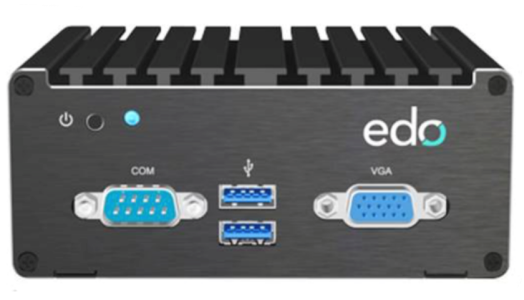
We install our gateway, a small yet powerful edge computer, in the building’s server room and connect to the controls network. The gateway identifies all connected devices using standard building OT network protocols like BACnet and Modbus. We then map and classify devices using a combination of artificial intelligence (AI) and manual categorization into a standardized data model and trend data at 1 min to 15 min intervals.
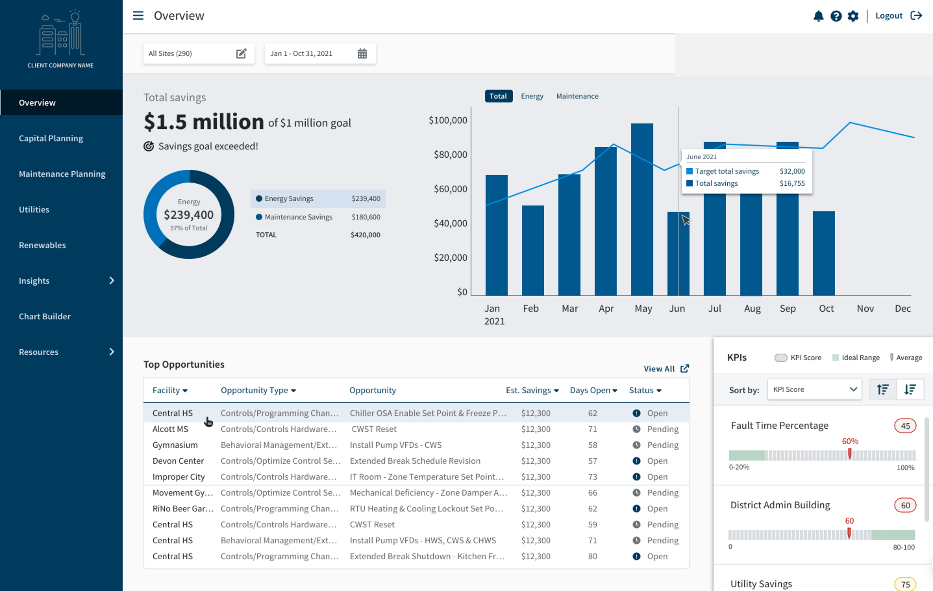
Torrens™, our energy management information system, aggregates the building data from the gateway with other sources, including utility bills, electric meters, weather forecast data, and building occupancy schedules. It provides comprehensive views of the building equipment and systems and identifies energy conservation measures and flexible load measures.
Common energy optimization measures include equipment scheduling, addressing defective sensors, and fixing malfunctioning control dampers. Once optimized, Edo prepares buildings for demand flexibility using predictive load control framework. This framework optimizes HVAC controls through forecasting, optimization, and control adjustments. Edo uses machine learning to forecast HVAC zone behavior based on weather, occupancy, and controls. Predictive load control then iteratively prioritizes HVAC controls for energy and demand savings, as well as comfort.
The need for cleaner and more efficient commercial buildings has never been more urgent.

Commercial buildings contribute nearly 40% of energy-related emissions. Policymakers worldwide are implementing ways to accelerate electrification and place caps on energy use and GHG emissions in the built environment.

460 companies across 41 countries have pledged net-zero carbon emissions by 2040. Once an act of global leadership, are now table stakes for any responsible business.
Over 180 cities and 20 utilities across North America have goals to power their communities with 100% carbon-free electricity. A rapidly growing trend.
Edo is the “energy information system” integrating the building energy management system, smart thermostats, smart meters, and utility power.

In most cases, buildings do not need new hardware to work with Edo. The platform is designed to integrate with existing building systems, including building automation systems and connected equipment already in place. During onboarding, Edo maps available data points and controls to ensure accurate monitoring and optimization.
In some situations, minor upgrades or additional connectivity may be recommended to enable specific capabilities, but Edo’s approach prioritizes using existing infrastructure whenever possible.
Edo’s demand flexibility programs are designed to maintain occupant comfort while adjusting energy use. The platform uses real-time data and forecasting to make controlled, incremental changes rather than abrupt curtailments. For example, buildings may be pre-conditioned ahead of an event or make small temperature adjustments within approved comfort ranges. Edo continuously monitors building performance during and after events to ensure systems return smoothly to normal operation without creating discomfort or operational issues.
Edo works best with commercial and institutional buildings that have controllable electrical loads and are managed at the site or portfolio level. This includes offices, schools, retail facilities, mixed-use properties, and other mid-size commercial buildings.
Edo is particularly well suited for buildings that participate in utility programs or operate in regions with time-of-use rates or demand flexibility opportunities where active energy management can deliver measurable value.
Edo integrates with a building’s existing systems to monitor and optimize controllable electrical loads. This commonly includes HVAC systems and other equipment connected through the building automation system. Where available, Edo can also coordinate with on-site resources such as EV chargers or battery storage. Control strategies are tailored to each building and are configured within parameters approved by the building owner or operator.
Building staff are not required to manually intervene during demand flexibility events. Once a building is enrolled and configured, Edo automates event participation based on pre-approved settings. Staff may receive notifications or performance summaries, but control actions are handled by the platform. This allows buildings to support grid needs without adding operational burden or requiring staff to manage events in real time.
Yes. Buildings retain control and can opt out of events or override control actions if needed. Edo’s platform is designed to operate within boundaries set by the building owner or operator, and override options are available to protect operations, comfort, or special circumstances. This flexibility ensures participation does not interfere with critical building needs or tenant requirements.
Buildings using Edo receive ongoing visibility into energy performance and program participation. This includes insights into energy consumption trends, demand flexibility performance, and event outcomes. Edo also provides reporting that helps buildings understand energy savings along with peak demand impacts and participation in utility programs. These insights support better operational decision-making and long-term energy planning.

Virtual power plants (VPPs) are increasingly supporting everyday grid operations—not just emergencies. As flexible load becomes more…

The Challenge Stonington Public Schools in Connecticut manages multiple school buildings with diverse heating, cooling, and v…

The grid you grew up with wasn’t designed for today’s demand. Demand flexibility is a proven solution that can be delivered rapidly …