
Case Studies
How Stonington Schools Built a More Efficient Energy Strategy
November 04, 2025
Share


The Challenge
Stonington Public Schools in Connecticut manages multiple school buildings with diverse heating, cooling, and ventilation needs. Aging equipment, seasonal inefficiencies, and limited visibility into persistent HVAC faults made it difficult for facility staff to optimize energy use without compromising comfort. In particular, schools often run systems unnecessarily during unoccupied summer months, adding avoidable costs. The district’s challenges: how to modernize operations, save energy, and stretch budgets while creating a healthier, more efficient learning environment.
The Solution
Edo partnered with Stonington and Eversource to improve visibility into system performance and prioritize cost-effective efficiency strategies.
- Real-Time Monitoring & Analytics – Edo’s platform continuously tracks HVAC performance, offering fault detection, dashboards, and interval data to guide smarter maintenance. Edo’s analytics and engineering team delivered a clear, prioritized list of measures. This enabled staff to focus on solutions instead of searching for issues.
- Summer Optimization Strategy – Cooling setpoints and fresh air intake were adjusted during unoccupied periods. This cut energy consumption while maintaining healthy indoor conditions.
- Collaborative Partnership – Regular check-ins with Stonington to ensure alignment of efficiency goals with day-to-day operations.
- Energy Upgrades – The district piloted new variable frequency drives, lighting upgrades, and energy management systems programming updates at three schools, supported by incentives issued through Eversource.
The Results
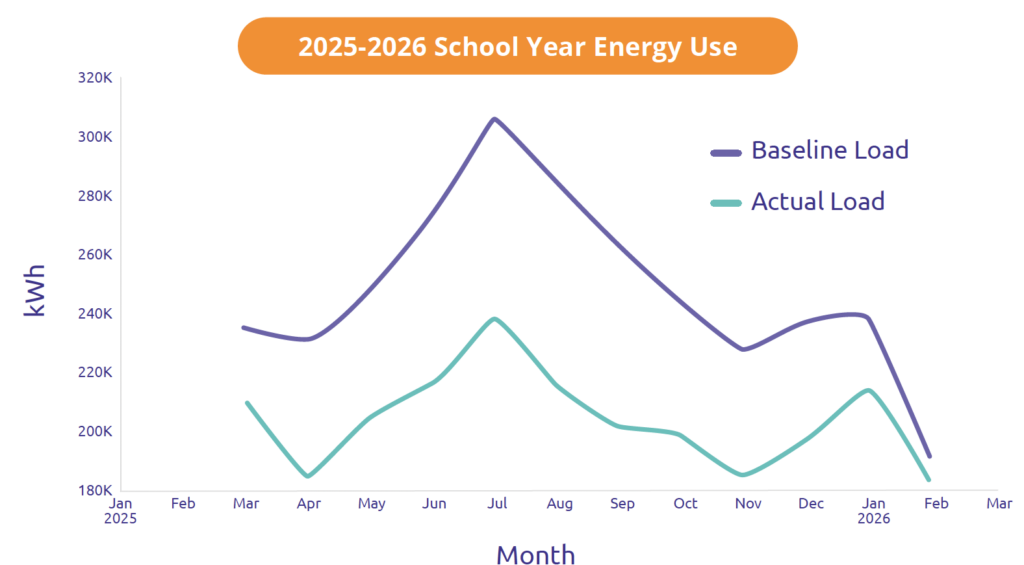
Between March 2025 and February 2026, Stonington achieved measurable financial and operational benefits across three schools and the district office:
- Energy Savings: 520,939kWh
- Program Savings: $152,236
- Efficiency Upgrades: $53,857 incentives earned
Stonington High School has shown particularly strong results in the 2025 to 2026 school year. It surpassed its goal of remainingunder 100,000 kWh for four months and achieved it in ten—resulting in a 30% year‑over‑year savings.The school district used the incentive funds topurchasea maintenance van, its first electric vehicle.
Conclusion
Through data-driven monitoring, efficiency upgrades, and close collaboration, Stonington transformed its facilities from reactive energy users into proactive managers of performance and cost. With Edo’s platform, the district is lowering bills, improving comfort, and building a resilient energy strategy that benefits both students and the community.
“The focused efforts from Edo’s team really helped usanalyze our building [energy] systems. We are still assessing and making changes to this day.”
Stephen Carroll, Director of Facilities & Operations, Stonington Schools