
INTELLIGENT VPP MANAGEMENT
Edo’s AI-driven platform transforms commercial buildings into virtual power plants (VPPs). By aggregating these flexible, grid-interactive assets, utilities gain the real-time visibility and automated control needed to manage buildings and distributed energy resources (DERs) for daily demand flexibility and peak reduction. As load growth accelerates, scalable demand-side flexibility is becoming essential to maintaining a reliable grid.

Recruit Commercial Buildings for VPPs
Recruit and enroll commercial buildings into VPPs using utility data and our expertise.

Enable Automated Flexible Load Control
Automate load adjustments in response to grid signals, while maintaining customer comfort and control.

Add Capacity without New Generation
Reduce peak demand with flexible load instead of new infrastructure.
CORE CAPABILITIES
Edo’s platform is built on deep expertise in energy management, offering robust, scalable solutions.
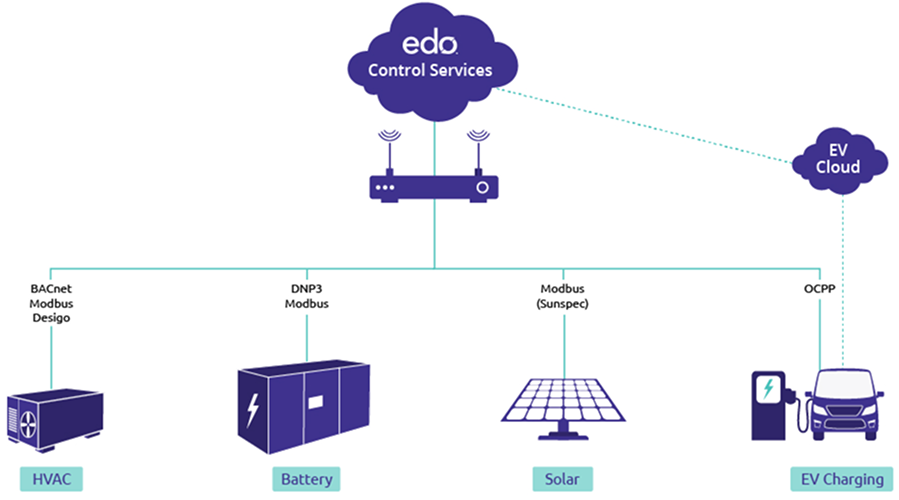
Edo’s Gateway (hardware) and Platform (software) interfaces with customers’ existing building management systems (BMS), eliminating the need for costly replacements. It connects with all behind-the-meter building assets including onsite DERs, and provides the customers and utilities with visibility into energy performance and grid-responsive capacity in real time.

Edo’s Gateway (hardware) and Platform (software) interfaces with customers’ existing building management systems (BMS), eliminating the need for costly replacements. It connects with all behind-the-meter building assets including onsite DERs, and provides the customers and utilities with visibility into energy performance and grid-responsive capacity in real time.
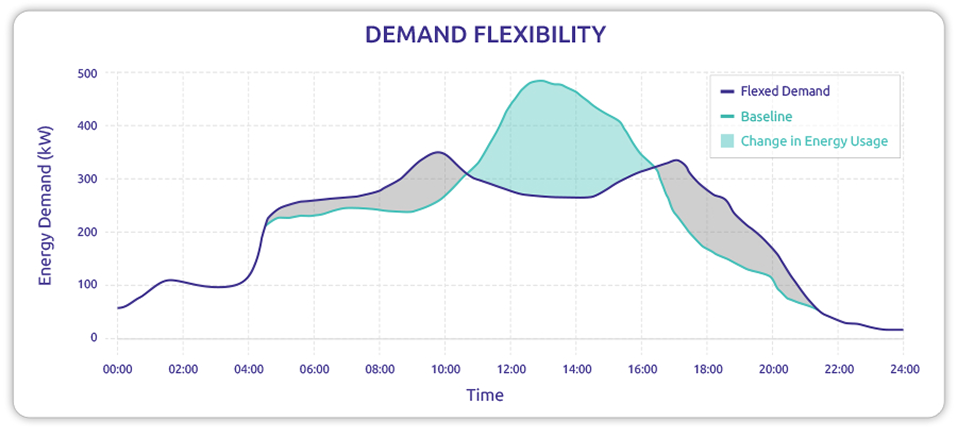
Adapt building and DER loads dynamically to changing grid conditions, customer preferences, and program goals. Edo’s machine learning and optimization models continuously improve load forecasting and dispatch strategies, delivering location-specific visibility and predictability for enrolled flexibility assets.
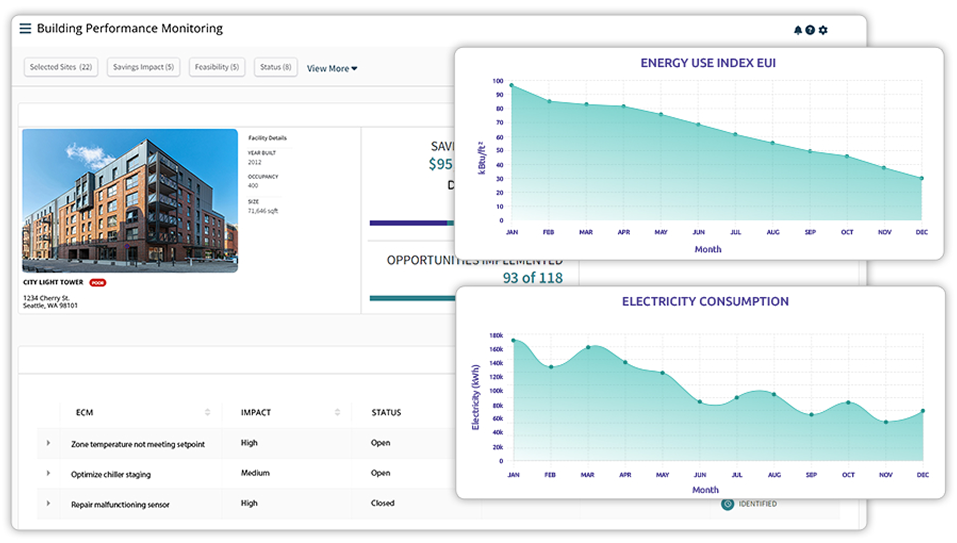
Edo combines energy efficiency and automated demand response in a singleseamless platform—without disrupting building occupants. The VPP integrates directly with utility ADMS or DERMS systems, optimizing asset dispatch based on forecasted availability and grid needs to maximize flexibility and reliability.
Flexible Buildings.
Reliable Grid.
We connect commercial buildings and distributed energy resources — from HVAC and lighting systems to solar, batteries, and EV charging — to deliver flexibility and reliability to the grid.

Office Buildings
Reduce peak demand through HVAC optimization, smart controls, and integration with solar and storage assets.

Education
Capture flexibility by integrating HVAC, lighting, and energy management systems for coordinated savings.

Healthcare
Balance reliability/efficiency with backup generation, optimizing non-critical systems, and patient safety/comfort.

Municipalities
Partner with public facilities to deliver measurable grid relief, community resilience, and operational savings.
Discover what Edo can do for you.
Commercial buildings participate in an Edo-enabled virtual power plant by enrolling flexible electrical loads—such as HVAC, lighting, EV charging, or other networked equipment—into Edo’s platform. Edo integrates with the building’s existing systems to monitor performance, identify flexibility opportunities, and automate load adjustments within parameters approved by the building.
These individual buildings are then aggregated across a portfolio to provide predictable, dispatchable capacity to utilities. Participation is designed to minimize disruption to building operations while allowing buildings to support grid reliability and earn utility incentives.
Edo’s virtual power plant integrates directly with utility systems, including Distributed Energy Resource Management Systems (DERMS) and Advanced Distribution Management Systems (ADMS). Edo can receive grid signals related to capacity needs, reliability events, or time-of-use pricing and translate those signals into coordinated load adjustments across participating buildings. The platform supports locationally aware aggregation, as well as performance reporting and measurement and verification (M&V), enabling utilities to plan and dispatch demand-side resources using existing operational workflows.
Edo-enabled virtual power plants can support a range of grid services, including peak load reduction, demand response, demand flexibility, and capacity support during constrained grid conditions. By aggregating flexible commercial building load, Edo helps utilities balance supply and demand, improve reliability during extreme weather or peak events, and defer or reduce the need for traditional infrastructure investments. The specific services supported depend on how a utility designs its program and the needs of the local grid.
Traditional demand response programs often rely on manual or disruptive load curtailments during emergency events. Edo’s virtual power plant combines energy efficiency, continuous optimization, and automated demand flexibility to shape load more dynamically and with less impact on building operations. Rather than relying on single, blunt curtailments, Edo uses real-time data and forecasting along with controls to deliver repeatable, measurable flexibility across many buildings, making commercial load a more reliable grid resource.
Edo-enabled virtual power plants typically include commercial buildings such as offices, schools, retail facilities, healthcare, and other mid-size and portfolio-managed properties.
Common participating loads include HVAC systems, lighting, and other equipment connected through the building automation system, as well as distributed energy resources such as EV chargers, batteries, or on-site generation when available. Edo focuses on buildings that are too complex for single-device programs but well-suited for portfolio-scale optimization.
Edo ensures virtual power plant reliability through real-time monitoring, forecasting, and automated controls across enrolled buildings. The platform evaluates performance at both the building and portfolio level, using established measurement and verification methods to assess load reductions during events and across seasons. By aggregating many buildings with diverse load profiles and applying locational awareness, Edo delivers more consistent performance than single-site or device-based approaches, helping utilities rely on demand-side capacity as a dependable grid resource.
News + Insights
The Power of the “Missing Middle”: Real Stories From Commercial Building-Grid Integration
Grounded in hands-on experience, the session highlights how automation, portfolio diversity, and better building data are helping ut…

2026: The Year of the VPP and the Rise of the “Missing Middle”
As load growth, extreme weather, and emerging load shapes are accelerating grid pressures, utilities are challenged to build infrast…

Edo and National Grid Launch Grid-Interactive Efficient Buildings Demonstration in New York
SEATTLE, WA, February 2026 – Edo today announced a new project to transform existing commercial buildings into grid-interactive effi…